

RISKS ASSOCIATED WITH FOREX TRADING
Trading foreign currencies can be a challenging and potentially profitable opportunity for investors. However, before deciding to participate in the Forex market, you should carefully consider your investment objectives, level of experience, and risk appetite. Most importantly, do not invest money you cannot afford to lose.
There is considerable exposure to risk in any foreign exchange transaction. Any transaction involving currencies involves risks including, but not limited to, the potential for changing political and/or economic conditions that may substantially affect the price or liquidity of a currency. Investments in foreign exchange speculation may also be susceptible to sharp rises and falls as the relevant market values fluctuate. The leveraged nature of Forex trading means that any market movement will have an equally proportional effect on your deposited funds. This may work against you as well as for you. Not only may investors get back less than they invested, but in the case of higher risk strategies, investors may lose the entirety of their investment. It is for this reason that when speculating in such markets it is advisable to use only risk capital.
What is Forex Trading ?
Forex Trading is actually BUYING and SELLING of currencies.
Quite simply, it’s the global market that allows the exchange of one currency for another.
If you’ve ever traveled to another country, you usually had to find a currency exchange booth at the airport or border, and then exchange the money you have in your wallet into the currency of the country you are visiting.
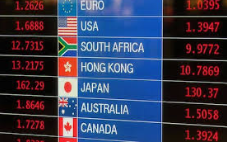
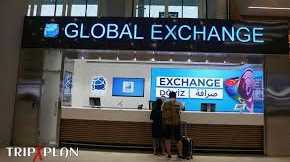
You go up to the counter and notice a screen displaying different exchange rates for different currencies.
You find “Japanese yen” and think to yourself, “WOW! My one dollar is worth 100 yen?! And I have ten dollars! I’m going to be rich!!!”
When you do this, you’ve essentially participated in the forex market! You’ve exchanged one currency for another.
Or in forex trading terms, assuming you’re an American visiting Japan, you’ve sold dollars and bought yen.
Before you fly back home, you stop by the currency exchange booth to exchange the yen that you miraculously have left over (Tokyo is expensive!) and notice the exchange rates have changed.
It’s these changes in the exchanges rates that allow you to make money in the foreign exchange market.
The foreign exchange market, which is usually known as “forex” or “FX,” is the largest financial market in the world.
Compared to the “measly” $22.4 billion per day volume of the New York Stock Exchange (NYSE), the foreign exchange market looks absolutely ginormous with its $5 TRILLION a day trade volume.
That’s trillion with a “t”.
Let’s take a moment to put this into perspective using monsters…
The largest stock market in the world, the New York Stock Exchange (NYSE), trades a volume of about $22.4 billion each day. If we used a monster to represent the NYSE, it would look like this…

Looks intimidating. Some may even find it sexy.
You hear about the NYSE in the news every day… on CNBC… on Bloomberg…on BBC… heck, you even probably hear about it at your local gym. “The NYSE is up today, blah, blah”.
When people talk about the “market”, they usually mean the stock market. So the NYSE sounds big, it’s loud and likes to make a lot of noise.
But if you actually compare it to the forex market, it would look like this…

Oooh, the NYSE looks so puny compared to the forex market! It doesn’t stand a chance!
Check out the graph of the average daily trading volume for the forex market, New York Stock Exchange, Tokyo Stock Exchange, and London Stock Exchange:

The forex market is open 24 hours a day and 5 days a week, only closing down during the weekend. (What a bunch of slackers!)
So unlike the stock or bond markets, the forex market does NOT close at the end of each business day.
Instead, trading just shifts to different financial centers around the world.
The day starts when traders wake up in Sydney then moves to Tokyo, London, Frankfurt and finally, New York, before trading starts all over again in Sydney!
In the next section, we’ll reveal WHAT exactly is traded in the forex market.
What Is Traded In Forex?
What is traded in forex?
The simple answer is MONEY.
Because you’re not buying anything physical, forex trading can be confusing.
Think of buying a currency as buying a share in a particular country, kinda like buying stocks of a company.The price of the currency is usually a direct reflection of the market’s opinion on the current and future health of its respective economy.
In forex trading, when you buy, say, the Japanese yen, you are basically buying a “share” in the Japanese economy.
You are betting that the Japanese economy is doing well, and will even get better as time goes. Once you sell those “shares” back to the market, hopefully, you will end up with a profit.
In general, the exchange rate of a currency versus other currencies is a reflection of the condition of that country’s economy, compared to other countries’ economies.
Major Currencies
While there are potentially lots of currencies you can trade, as a new trader, you will probably start trading with the “major currencies.”

• The major Forex pairs and their nicknames:

Currency symbols always have three letters, where the first two letters identify the name of the country and the third letter identifies the name of that country’s currency


Take NZD for instance. NZ stands for New Zealand, while D stands for dollar
The currencies included in the chart above are called the “majors” because they are the most widely traded ones.
Buying And Selling Currency Pairs
Forex trading is the simultaneous buying of one currency and selling another. Currencies are traded through a broker or dealer, and are traded in pairs.
For example the euro and the U.S. dollar (EUR/USD) or the British pound and the Japanese yen (GBP/JPY).
When you trade in the forex market, you buy or sell in currency pairs.

Imagine each currency pair constantly in a “tug of war” with each currency on its own side of the rope. Exchange rates fluctuate based on which currency is stronger at the moment
The currency pairs listed below are considered the “majors.”
These pairs all contain the U.S. dollar (USD) on one side and are the most frequently traded.
The majors are the most liquid and widely traded currency pairs in the world.
| CURRENCY PAIR | COUNTRIES | FX GEEK SPEAK |
|---|---|---|
| EUR/USD | Eurozone / United States | “euro dollar” |
| USD/JPY | United States / Japan | “dollar yen” |
| GBP/USD | United Kingdom / United States | “pound dollar” |
| USD/CHF | United States/ Switzerland | “dollar swissy” |
| USD/CAD | United States / Canada | “dollar loonie” |
| AUD/USD | Australia / United States | “aussie dollar” |
| NZD/USD | New Zealand / United States | “kiwi dollar” |
Major Cross-Currency Pairs or Minor Currency Pairs
Currency pairs that don’t contain the U.S. dollar (USD) are known as cross-currency pairs or simply as the “crosses.”
Major crosses are also known as “minors.”The most actively traded crosses are derived from the three major non-USD currencies: EUR, JPY, and GBP.
Euro Crosses
| CURRENCY PAIR | COUNTRIES | FX GEEK SPEAK |
|---|---|---|
| EUR/CHF | Eurozone / Switzerland | “euro swissy” |
| EUR/GBP | Eurozone / United Kingdom | “euro pound” |
| EUR/CAD | Eurozone / Canada | “euro loonie” |
| EUR/AUD | Eurozone / Australia | “euro aussie” |
| EUR/NZD | Eurozone / New Zealand | “euro kiwi” |
| EUR/SEK | Eurozone / Sweden | “euro stockie” |
| EUR/NOK | Eurozone / Norway | “euro nockie” |
The chart below shows the seven most actively traded currencies.

The dollar is the most traded currency, taking up 84.9% of all transactions.
The euro’s share is second at 39.1%, while that of the yen is third at 19.0%.
As you can see, most of the major currencies are hogging the top spots on this list!
The Dollar is King in the Forex Market

How to Make Money Trading Forex
If you buy EUR/USD this simply means that you are buying the base currency and simultaneously selling the quote currency.
In caveman talk, “buy EUR, sell USD.”
- You would buy the pair if you believe the base currency will appreciate (gain value) relative to the quote currency.
- You would sell the pair if you think the base currency will depreciate (lose value) relative to the quote currency.
Long/Short
First, you should determine whether you want to buy or sell.
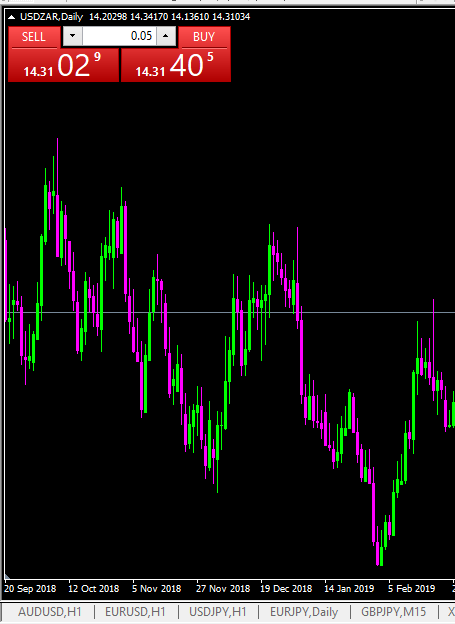
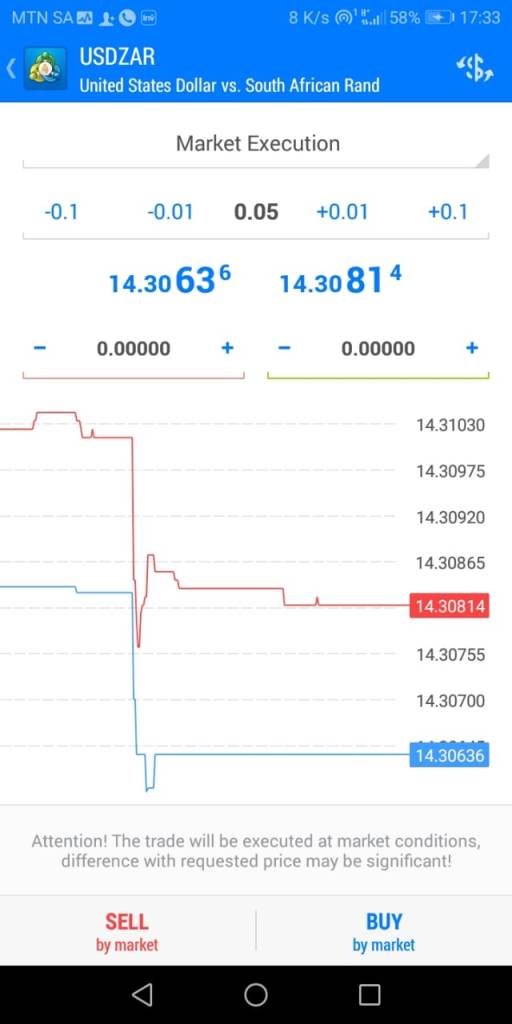
If you want to buy (which actually means buy the base currency and sell the quote currency), you want the base currency to rise in value and then you would sell it back at a higher price.
In trader talk, this is called “going long” or taking a “long position.” Just remember: long = buy.
If you want to sell (which actually means sell the base currency and buy the quote currency), you want the base currency to fall in value and then you would buy it back at a lower price.
This is called “going short” or taking a “short position”. Just remember: short = sell.
 Know Your Roots
I need a job
LikeLike
Hi Hlobisile,
Unga pheli moya, You will find the job. Visit Careers/Jobs tab on the Menu bar.
Hope things work out for you.
LikeLike
I need a job please,i have grade 9
LikeLike
Hi Dimakatso,
Otla fumana mosebetsi ngwana wa bo rona.
Visit our Careers/Jobs tab. Modimo gaakete ore rata rotlhe, don’t you lose hope
LikeLike
What is needed from me to start learning Forex?
LikeLike
Hi Sisanda,
You see that smartphone of yours? You only need that or laptop. I’ll prefer computer or laptop if you’re a beginner, it’s gona be much easier, but then again if you don’t have one, use that smartphone. Or you can use computers at library.
If you need more help, I’m here to assist.
Forex is the way
LikeLike
I need job I have grd12
LikeLike
Hi Errol,
Trust me you will find the job soon. Visit our Careers/Jobs tab, we also advertise Bursaries,Internships and Learnerships.
God will remember you this season.
LikeLike
Forex nea
LikeLike
Imfkk8445mk
LikeLike
Good day
Can you kindly send me a link or more information on where to start.
Keithbyrnes43@gmail.com
LikeLike
Hi Keith, On the Download Tab, there are books/pds for the beginners, they’re very powerful. Please let me know if you strugling
LikeLike